Let me tell you about the advantages of a good high school education and the importance of one’s experiences during those formative years. I was a 1930’s kid. I entered The Ethical Culture Fieldston School in September 1941 as a Third Former, a high school freshman. Fieldston is an educational arm of the New York Society for Ethical Culture. It is the granddaddy of the humanistic movement. It was founded by Felix Adler in the 1880s.
Three months later, after the Japanese attack on Pearl Harbor, we were into World War II. The war ended in August four years later, shortly after our Class of ’45 graduated. Of the seventy-six students in the class, fifty were girls. Many, if not most, had been together since kindergarten, either at Downtown Ethical or at Fieldston Lower and Middle School. I was the only Queens kid.
My previous school experience was in traditional Queens public schools — PS 48, 23, 21 and 20. In fact, I was accepted by Fieldston directly from 8A. Consequently, I never finished the eighth grade and never graduated from elementary school.
We lived in Flushing, a mile away from the end of the No. 7 IRT subway. It took you to Times Square. From there you picked up the Broadway Subway and traveled to the end of the line at 242nd Street and hiked up the hill to Fieldson. To avoid the long, daily two-way commute during the week I boarded with three local families over the next four years. Being away from home during the week helped me learn how to take care of myself.Continue reading “The Fieldston Years”→
I can no longer say I’m 86 going on 87; I’m 87. It’s been a good year — 2014. My birth year and the calendar year almost match since I was born on January 7th.
I’m feeling fine, although I must admit to tiring more easily, and that I can’t walk as fast, or as far as I used to in my younger years. Both my cardiologist, and my internist said they don’t want to see me for another year. I’m going to try to hold them to that.
I treat every day as a holiday. They have been fun and productive.
Bernie order a crepe from the crepe truck at Erin and Grace’s wedding.
The big news is that my coworker, colleague and buddy, Erin Coyle, and her partner, Grace, got married. First on October 4th in DC and then again, a week later on the 11th here in North Carolina. Both ceremonies were fantastic and it pleases me to have helped make them happen. As it turned out, the second one was not necessary. The law had changed. Can you imagine that? Two beautiful, fine young women getting legally married to one another. Moreover, the marriage was recognized by both the Federal and the State governments. That never would have or could have happened when I was younger. Some things have changed.
Not all changes have been for the better. When I was growing up and moved to North Carolina in the 1940’s, it was the most liberal of the Southern States. Frank Porter Graham was the Presidentof University of North Carolina-Chapel Hill at the time. He later became our U.S. Senator and so did Sam Ervin. Last year, many who participated in our Moral Mondays were arrested in Raleigh, as the Federal and State governments have become more and more under the control of corporations and big money. The last time I checked, the Supreme Court said that corporations were “persons!” I thought “persons” had a heart. When I taught economics, the role of government was to rein in corporate excesses. That is my field. I promise, for now at least, I’ll get off my soapbox.
When I was growing up, the people who lived within the boundaries of any of the 48 — now 50 —States, were responsible for its governance and represented it at the federal level — not outsiders and outside money. Admittedly, governments as economic institutions have problems and imperfections. especially in periods of change. I can speak to that professionally. From a lay perspective, there are clearly political issues as well. Oh, I’m sorry. I promised I get off my soapbox. 87-year-olds forget!
In part, at least, those changes have caused me to shift my focus. I was focusing on a project called: The Imperfect Health-Care Market: Making it work for you. But healthcare is in the hands of the stakeholders, promoting their own self-interest, not those of the potential beneficiaries. What I have to say will not be heard by those who could improve the situation.
Instead, along with Erin’s help, I am working on the economics of art and craft. Here’s some of the papers that are currently in the works:
• An Economist’s Take on Pricing Art and Craft — A Pricing Manual
• The Economics of Fine Art and Fine Craft
• Behind Each Work of Art
The big news is that Erin and I have just published a book, called: The MiniBook: a Guide to Self Care. And this is only the first volume! It is a compilation of my sayings and the images Erin created to go along with them. For more about the book check out out our website. It has been well received. If you like what you see, we’d be glad to send you a copy of the book or prints of any of the images along with the sayings that turn you on.
And, of course, there’s always the blog. But you already know about it.
Last August I talked about the Cost of War and how taking it into consideration beforehand improves our understanding and choices. In this post I would like to show how those deliberations help in our day to day decisions as well.
When someone asks you to do something — anything — think before you say, “Yes”. As adults our primary responsibility is to take care of ourselves first. That involves providing the basic inputs required to survive. It also includes fulfilling any commitments and obligations that we have taken on including the tasks involved in every day living. Either we perform the required tasks ourselves, provide goods and services to others in exchange for the ones they provide us, or earn the income necessary to purchase them.
Regardless of how we get those goods and services, what we use up is our own time, energy, resources and funds. Let’s call it our TERF. Since there are only twenty four hours in a day, the amount of TERF each of us has available is limited. Survival requires that certain things be done first including making sure we have enough of the basic inputs — clean air, fresh water, food, rest, clothing and shelter. Providing for them is our primary priority. That always requires a certain amount of our TERF. Another priority is allocating the TERF required to fulfill any commitments and obligations we have taken on. They include those involving our spouses or partners, having and raising children, taking care of sick or aging parents, friends or animals, etc. Here again, each of them requires more of our limited TERF.
Marriage is a statement about a bonding and a commitment between two people. Outsiders and the State can and should honor that commitment, especially since it does not adversely affect anyone else.
The nominal rationale, by those that oppose same-sex marriage, is that heterosexual couples are best suited for raising children.
Let’s start by saying that is an assertion. Where is the proof? Even if it were true, having and raising children is not the only reason for marriage. As I said earlier, it is about bonding and commitment between consenting adults. Turn it around. Would you want anyone to tell you who you should be with, what is right for you, and what you should do? Now let’s look at “the best for the children” argument. Having children is not the reason most couples get married. Certainly not all want or have them. Some who do, sometimes can’t. Moreover, the bonding provided by marriage lasts long after the children have left the nest. That is simply not a basis for providing the rights and privileges of bonding only to heterosexual couples.
Taking it a step further, just in case you haven’t noticed, many couples break up. When they do, the children are raised by a single parent, the separated parents, or someone else. At other times, a single adult or teenager gets pregnant. If she does not want the child, or can’t afford to take care of herself much less the child, and is not permitted to have an abortion, then her options are limited. At times the child is raised by a parent that didn’t want it, frequently under impoverished circumstances. That is especially difficult if the parent does not have sufficient education and experience to get a well-paying job. Moreover, she must spend much of her time taking care of the unwanted child. Sometimes the mother and/or the child require governmental services, or at other times the child may become a ward of the state. Many of those who are opposed to same-sex marriages are the same individuals who want to eliminate government services and reduce the size of government. Do you really believe the child and society are better off in any of those circumstances, than if the child was raised by a couple in a loving homosexual marriage?
The bottom line is that heterosexual marriages are “the best place to raise children” is not a rational basis for not permitting and honoring homosexual relationships and providing those who wish to engage in them the same rights and privileges as all citizens. Though it may not be my sexual preference or orientation, I can still see no reason for denying those for whom it is their rights and privileges.
Something happened recently that I’d like to share with you. I’ve decided to change tacks and follow my heart and my gut. Together, Erin Coyle and I have been trying to help others understand the broken health-care system and how to work their way around and through the intricacies of it. We’ve enjoyed doing it and have even gotten some favorable responses. From time-to-time some of the ideas have shown up as blog posts or as topics on my website: www.imperfecthealthcaremarket.com.
Early in November, I got a call from the St. John Historical Society. They were planning a meeting in December honoring St. John baskets, and they asked me to come down to talk about them. The Virgin Islands, volcanic in origin, rose out of the ocean like mountaintops cropping out of the sea. The two larger ones are St. Thomas and St. Croix. The smallest — St. John — is where I lived for eighteen years. When I first moved there in 1987, I studied St. John basketry. Through basketry, I met Mr. Herman Prince, St. John’s premier basketmaker and basketry teacher. When I told Mr. Prince that I wanted to write an article on St. John baskets, he said, “Before you write an article about baskets and basketry, you
Mr. Herman Prince. St John’s premier basketmaker and teacher. (Picture courtesy of the St. John Historical Society.)
should learn how to make one.” So I took his course at Hawksnest. Not only did I learn how to make a basket, I also learned much about the culture. In 1990, I published a basketry article, entitled, “Basketmaking on the Island of St. John,” in The Clarion, the magazine of The Museum of American Folk Art. My interest in basketry didn’t end there; during my 18 years on St. John, I collected more than 25 baskets, many made by preeminent St. John basketmakers.
The phone call from the St. John Historical Society got me thinking. Sometime in late November, I pulled the collection of baskets out of the attic, looked them over, and realized how special and beautiful they are. Five of Mr. Prince’s baskets arein my collection, as well as others from St. John basketmakers such as Louise Sewer; her daughter, Lorrel; Victor Sewer; Felicia Martin; and Ina George. I also own a basket made by renowned basketmaker Jackie Abrams, who visited St. John in 1993-94.
Looking over my baskets, I thought, “Wow – some of these baskets really are fine art.”
Unbeknownst to me at the time, the Renwick Gallery of the Smithsonian American Art Museum had just launched a basketry exhibit: “A Measure of the Earth: The Cole-Ware Collection of American Baskets” on display from October 4, 2013 to December 8, 2013. Looking over the catalog, I realized that one of the 63 baskets in the exhibit was made by my old friend and teacher, Herman Prince! His “St. John Market Basket” was in the exhibit and is now part of the Smithsonian’s permanent collection; you can see it on the exhibit’s website and on page 144 of the show catalog. One of Jackie Abrams’ baskets was also in the exhibit as part of the Cole-Ware Collection.
I began to really think about my time on St. John, especially the time I spent with the basketmakers. Many basketmakers that I knew, including Mr. Prince, have already died. I quickly realized that if I don’t tell the stories about them, valuable information about the basketmakers and the baskets will be lost, forever.
Preserving the collection – and the stories that go with it – is important not only so people can learn about St. Johnian basketry and its relationship to the culture; it can even preserve and pass on the art of basketry itself. One of the baskets in
Mr. Herman Prince’s, St. John Market Basket.
the collection is a miniature St. John basket with a cover, made by Ms. Lorrel Sewer. She learned basketmaking – the form called wist work – from her mother, a premier basketmaker in her own right. Ms. Lorrel gave me the basket for the collection in 2000. A number of years later, I got a call from her asking if I would be willing to send it back to her. She wanted to make another one, but she had forgotten how to make the cover.
Ms. Lorrel had lost that skill, and there were no other basketmakers alive to teach her. Because I had preserved the basket by keeping it as part of the collection, she was able to re-learn how to make a basket cover by studying her own work!
So what I’ve decided to do is to make a video that documents my collection of baskets. It will bring the baskets and their history to light and to life. It will honor the basketmakers who came from the small, isolated island community of St. John. I want to help tell the story of how they raised the level of the baskets they produced to museum-quality fine art. I want to make sure that the stories, memories, and culture of these beautiful people will not be lost! I plan to donate the video and all of the baskets in the collection to the St. John Historical Society. I want to honor the makers and help preserve their stories and culture for future generations of historians, visitors and viewers.
In short, I have decided to follow my true passion. For now, the other important things we have to offer will just have to wait.
You may have noticed that the blog name has changed, reflecting yet another year gone by. I want to offer three gifts to Anna — my birthday buddy, and to everyone and to the Universe on my 86th Birthday.
1st My true Love to all.
2nd A suggestion — at 86 I don’t give advice. It is, “The only standards you have are the ones you set for yourself; and don’t be afraid to make a mistake, you can learn from it.”
3rd Is a story.
This past week at 85 going on 86 I learned something. My driver’s license was about to expire on my 86th birthday. It had to be renewed. My eyesight is not as good as it has been and I was afraid I would not pass. The fear kicked in and along with it came delays, procrastination, excuses, etc. What should I do? What will happen if I don’t pass? Now I’ll teach you a Yiddish term, one of the few I know. It is to “Dreh” something. (I’m not sure of the spelling, but you pronounce it like “lay” with the accent on the D.) It means to over obsess about something, anything.
It is a waste of time. Deal with the situation. Except the reality for whatever it is and adjust to whatever limitations it imposes — if, in fact, those limits actually occur. That is not to say, that there are those times when some preplanning and preparation will help. But the time spent on over-worrying about it and the energy wasted on the anxiety can be better spent on something, anything else. Like just cooling out. See, in the end, I am an economist.
Think about it. The best, truest and long-lasting gifts are the nonmaterial, non-monetary ones that come from the heart.
Love,
Bernie
P.S.: Thank you, Erin, for acknowledging the transition by changing the Blog heading.
In today’s world, communication –if you want to call it that –seems one-sided. As a 1930s kid, I could never have imagined talking to a computer. Yet that’s what I do everyday.
Yesterday I got my monthly bill from Time Warner Cable. I called the suggested phone number. It knew the number I was calling from without my saying a word. By the end of the transaction I paid the bill by credit card and the computer said, “Thank you.” Later in the day there was a message on my answering service. My doctor’s office called to remind me of my next appointment. A computer was talking to a computer. Continue reading “Communication”→
Intervention is frequently based on the medical and public perception and assumption that doing something is better than doing nothing. That is not always the case. There are times when the net benefits of all interventions are negative — that is, anything you do will make you worse off. Rather than starting with the underlying philosophy, “You/We should be able to do something that will fix it” begin by asking what are the likely benefits and costs of each of the alternatives. Then chose the one where the net benefits — the benefits minus the costs — are likely to be the greatest. Take no action when that provides the best results.
When the patient/consumer is not paying for the service, he/she is placed in the position of not having to consider what they are giving up when having the procedure. When that happens they are more likely to elect to have more services than they would if they had to pay for them. Historically, that goes under the name “Moral hazard”. Moreover, the prescribing practitioner and the PhysicianFirm almost always benefit from the additional revenue they receive from providing those services. Often it is someone else, like an insurance company or the government, who ends up paying the bill. Continue reading “Should I Enter a Clinical Trial–Part Four”→
With few exceptions, every prescription and over-the-counter (OTC) drug and medical device marketed in the U.S. has to be approved by the Food and Drug Administration (FDA) for efficacy and safety. That is where clinical trials come into play. They provide the information required for clearance. It is critically important to realize that for any drug or device in a clinical trial it is impossible to know beforehand what the outcomes of the intervention — both favorable and unfavorable — will be. No one — not even the best informed minds — know that. That is the reason for having a clinical trial. The trial is based on an hypothesis — a.k.a,, a guess. Sometimes it is correct, sometimes not. If the outcomes, or the range within which they fall were understood, there would be no reason for the trial.
Not all clinical trials are successful. Some drugs do not even make it through Phase I (which determines if the drug is safe and the dosage levels). Others are withdrawn before they complete Phase II (which tests for efficacy and safety). They can be withdrawn because they are ineffective, unsafe or have damaging side effects or considered to be non-profitable. Still others may not offer a significant improvement over current therapy represented by the control group. Only some of the ones that get through those hurdles are ultimately cleared for marketing by the FDA.
One of the things that has made me feel isolated is my hearing loss. I don’t hear as well as I used to. High-end frequencies create the biggest problem. It is harder to hear what girls and women say, especially those who mumble or don’t speak clearly. It is challenging to understand dialects like those in British movies and TV programs. Figuring out what is being said is difficult and tiring enough but made even worse when someone has their back to me or we are in a noisy restaurant or at a stage performance. It can be a real chore.
Once a week my friends, Erin and Grace have a “Tea” salon. They invite friends for an evening get-together. They are in their 30s and they invite me. Wow! Sometimes there are just a few of us, sometimes many more. When the group is large and when there are side conversations, keeping up with what’s being said is hard. Especially when someone slides a side comment or joke into the conversation. The discussion frequently centers around music. Importantly, there are significant differences in our musical background. When I grew up in the late 30’s and early 40’s we had big bands, jazz, folk and North Carolina mountain music — the Dorsey brothers, Louis Armstrong, Cab Callaway, Gene Krupa, Frank Sinatra, Woody Guthrie, Pete Seeger, Lena Horn, etc. I saw Sintatra on stage at the Paramount Theater in Manhattan in the early 40s and Krupa’s band played at a dance at UNC- Chapel Hill later in the decade. It was the only time I went to a formal; I had to borrow a tux. I still hear sound of Krupa’s masterful drumming. Continue reading “Speak up, young friends!”→
 Let me tell you about the advantages of a good high school education and the importance of one’s experiences during those formative years. I was a 1930’s kid. I entered The Ethical Culture Fieldston School in September 1941 as a Third Former, a high school freshman. Fieldston is an educational arm of the New York Society for Ethical Culture. It is the granddaddy of the humanistic movement. It was founded by Felix Adler in the 1880s.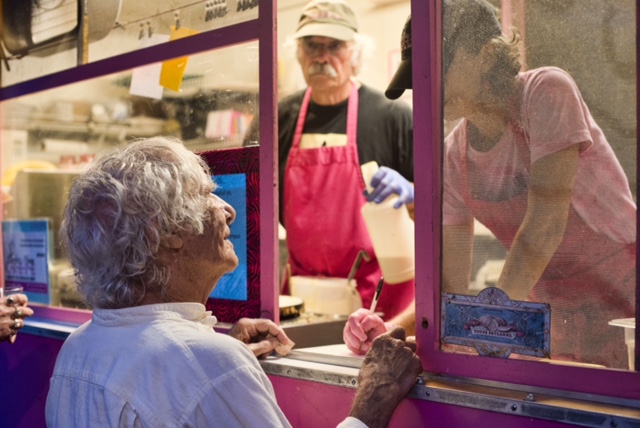





 Perspectives of an Immortal Economist